
MATHS
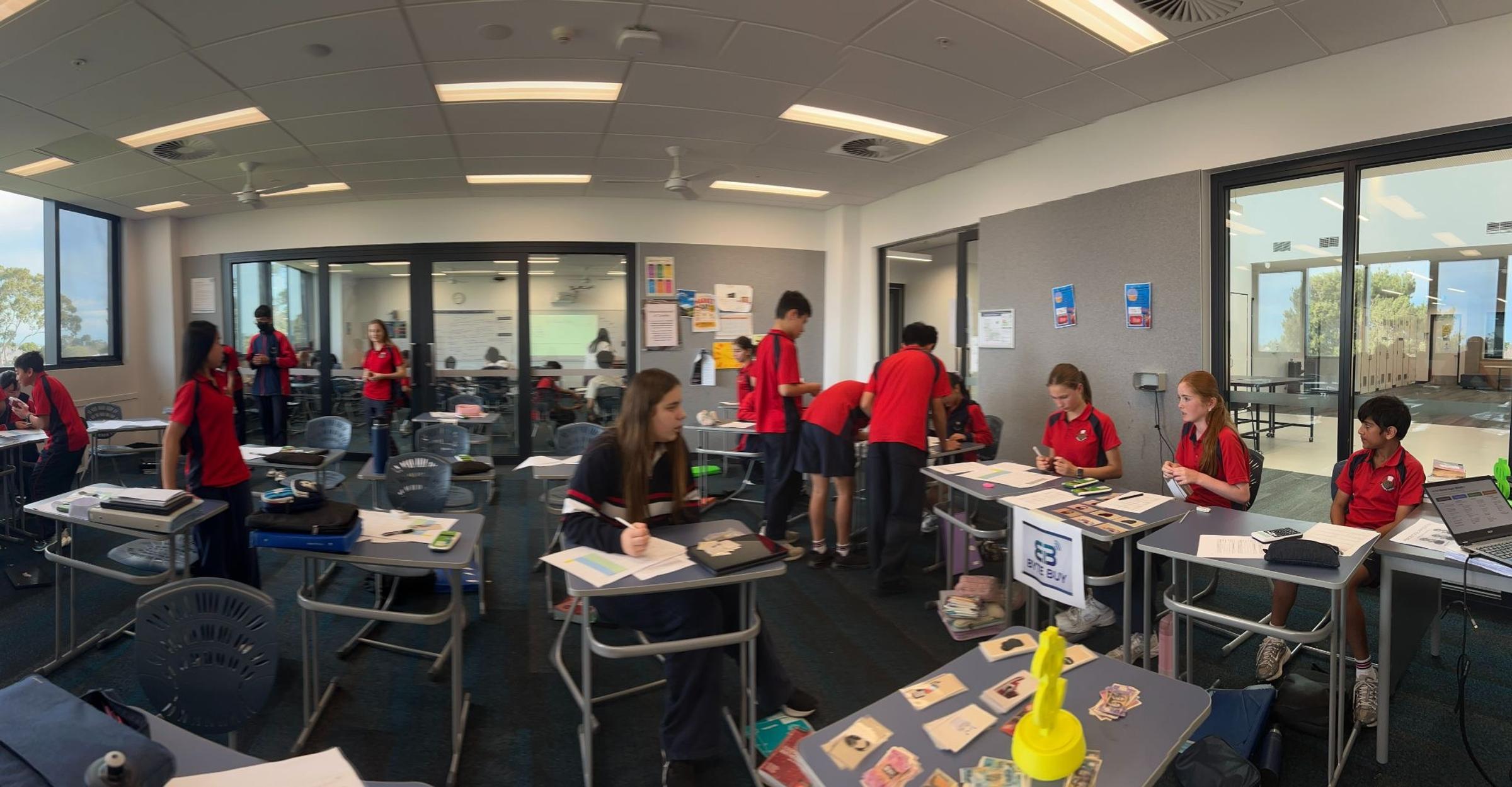
HAPPENINGS IN YEAR 8 MATHS
Our Year 8 students recently stepped into the shoes of entrepreneurs during our hands-on Market Madness Activity! The activity was designed to bring real-world mathematics and business management to life; this collaborative task challenged students to calculate product markups and discounts, analyse profit margins, and manage real-world pricing strategies. This enabled students to apply percentage concepts and skills taught this term.
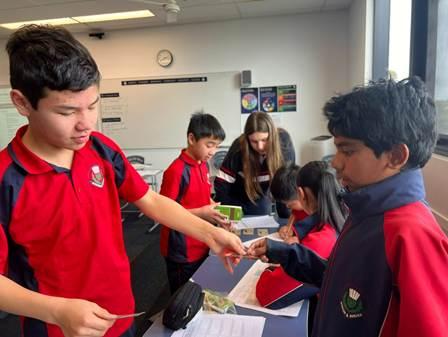
Students gained valuable insights into the mathematical precision and strategic decision-making that is required to run a successful business, providing valuable preparation for their Market Day Stall.
Mr Georgiadis
Maths Teacher
STUDENT EXPERIENCE AND FEEDBACK
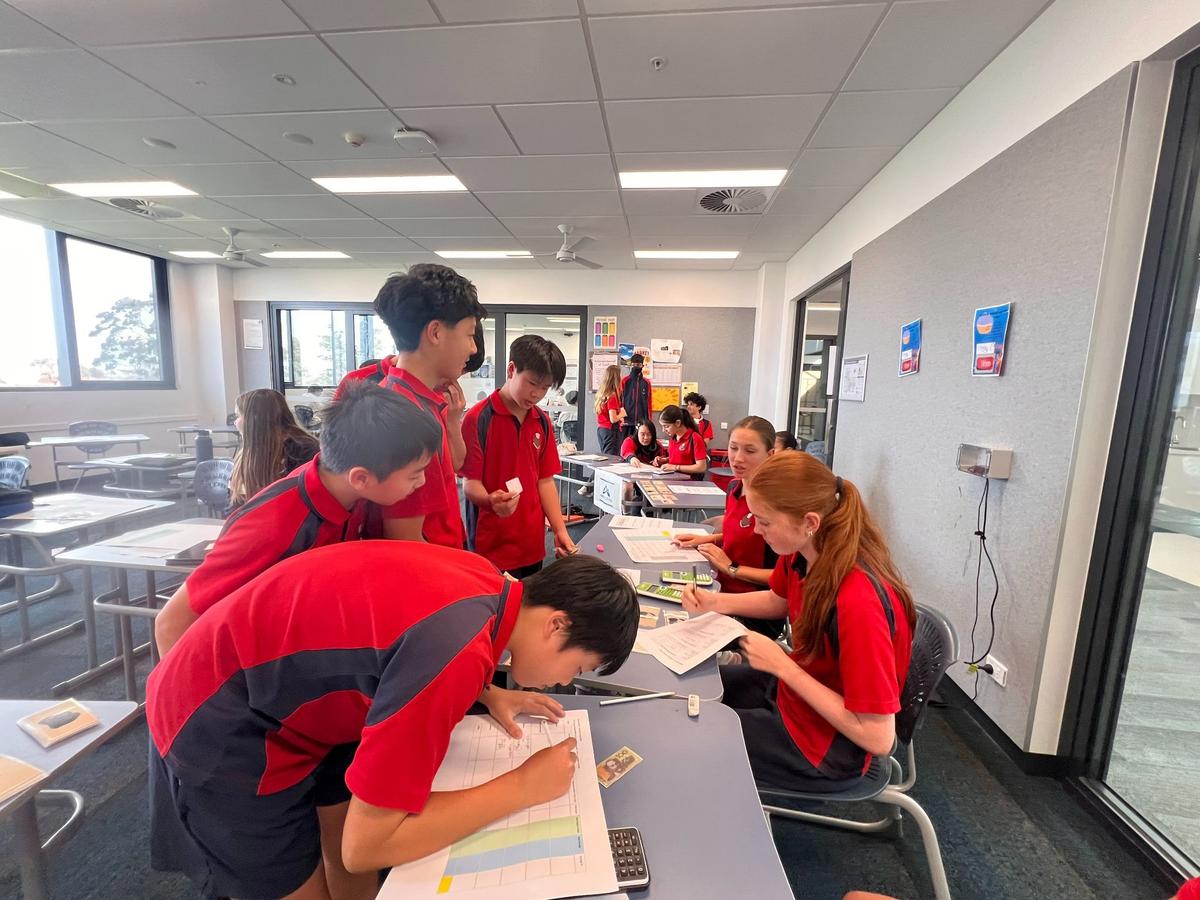
The Merchant Madness activity was extremely successful and fun as we explored how businesses run through hands-on experience with profits and percentages. The skills in this unit relate directly to running a business or stall in the Market Day. The activity included wholesalers, retailers, and customers, showing the flow of money and items from the producer (teacher) to wholesalers, then to retailers, and finally to customers. This activity develops life skills by demonstrating how money works.


James Tuladhar & Harit Grover, Year 8
During math class, we completed an activity about running our own market stalls. This activity was beyond fun, and I really enjoyed it, as it helped to enhance my knowledge on how to run my own business, how to deal with customers, and helped to improve my math skills. These skills are important for everyday life and can also provide valuable experience for my future career. Overall, this activity was both educational and enjoyable, and I would definitely choose to participate in something like this again.

Melina Movsisian, Year 8
Our Market Day activity was a fun and practical opportunity to apply what we had learned about percentages to a real-world business situation. As a retailer, my group was responsible for purchasing and selling products while competing to achieve the highest profit.
Throughout the activity, I applied mathematical concepts such as percentages, mark-ups, discounts, profit and price changes, which helped me make informed decisions for our business. I also learned how pricing strategies and understanding customer behaviour can influence the outcome of a sale. In addition, I developed important business skills such as budgeting, teamwork, quick decision-making and the ability to adapt to unexpected situations. Keeping track of our purchase and selling prices was challenging, particularly when multiple transactions were taking place at the same time.
This taught me the importance of organisation and accuracy. Overall, the project demonstrated that successful retailing is not simply about purchasing products at the lowest price and applying a high mark-up. It involves considering customer demand, pricing strategies and real-time adjustments of costs. I would like to thank Mr Georgiadis for organising this project and providing us with such an exciting opportunity.

Yukino Kakichi, Year 8
There were three roles in the activity namely: the Customer, Retailer and Wholesaler. I played the role of the Wholesaler who had the duty of buying the goods from the manufacturer and distributing them to the retailer. The main problem in most of the rounds was how much stock should be bought and sold so as to make some profit. It was hard in the beginning since nothing was purchased; hence, nobody made any profit.
Every round was unique in its own way. While some rounds were hectic and competitive, others were leisurely. Everybody aimed at striking bargains and getting profitable deals, therefore, being proactive was important. In such a way, this activity resembled real life since the same things take place in real-life situations when businesses try to gain profits.
Mathematical concepts were used in this activity in many ways, namely: Total Revenue, Total Cost, Net Profit and Profit Margin were calculated by means of percentages. When I realised the connections between all those calculations, it was much easier to determine whether a trade is profitable or not. Sometimes even minor changes in cost or selling price could make a huge impact on the profitability of a trade. Budgeting, negotiation and distribution of the stocks became my practical skills.
The above-mentioned skills can be applied in Market Day activity, where the students set up their stalls and sell different goods, such as snacks, key rings and other products. The cost of buying should be less than the price that we sell them in order to get some profit from it.
A special thank you to Mr Georgiadis and everyone who organised this activity and made the experience of learning percentages meaningful!

Yash Nijjar, Year 8
WINNERS
Winners had the greatest percentage profit margin on sales or the greatest percentage savings on purchases.

Wholesalers: Yash Nijjar and Monica Kearvut
Retailers: James Tuladhar, Harit Grover, Liam Morris & Yukino Kakichi, Hunter Jeong and Rohan Praveen Gowda
Customers: Terry Peng
MEANWHILE IN YEAR 8 ELMS …
In Term 3, Year 8 ELMS students applied their mathematical skills to a practical Consumer Arithmetic project. Using assigned salaries and lotto payouts, they calculated simple and compound interest, processed pay raises, determined taxes due, searched for a dream home (within their budget), and investigated mortgage repayments.
Mariza Pagel, Krishna Fleming and Emma Griffingham
Year 8 ELMS Teachers
STUDENT FEEDBACK
In Term 3, Year 8 ELMS classes embarked on a journey to learn the mechanics of ‘Consumer Arithmetic.’ As a cohort, we explored financial situations such as simple interest, compound interest, taxes, salary pay rise, inflation, and even our very own opportunity to purchase a property! Each student received a proportion of an amount of Lotto winnings and used the money to explore the aspects of how interest works. After that, we were given a job by random choice that would each pay different amounts of money, creating classroom adversity as we squabbled about our salaries.
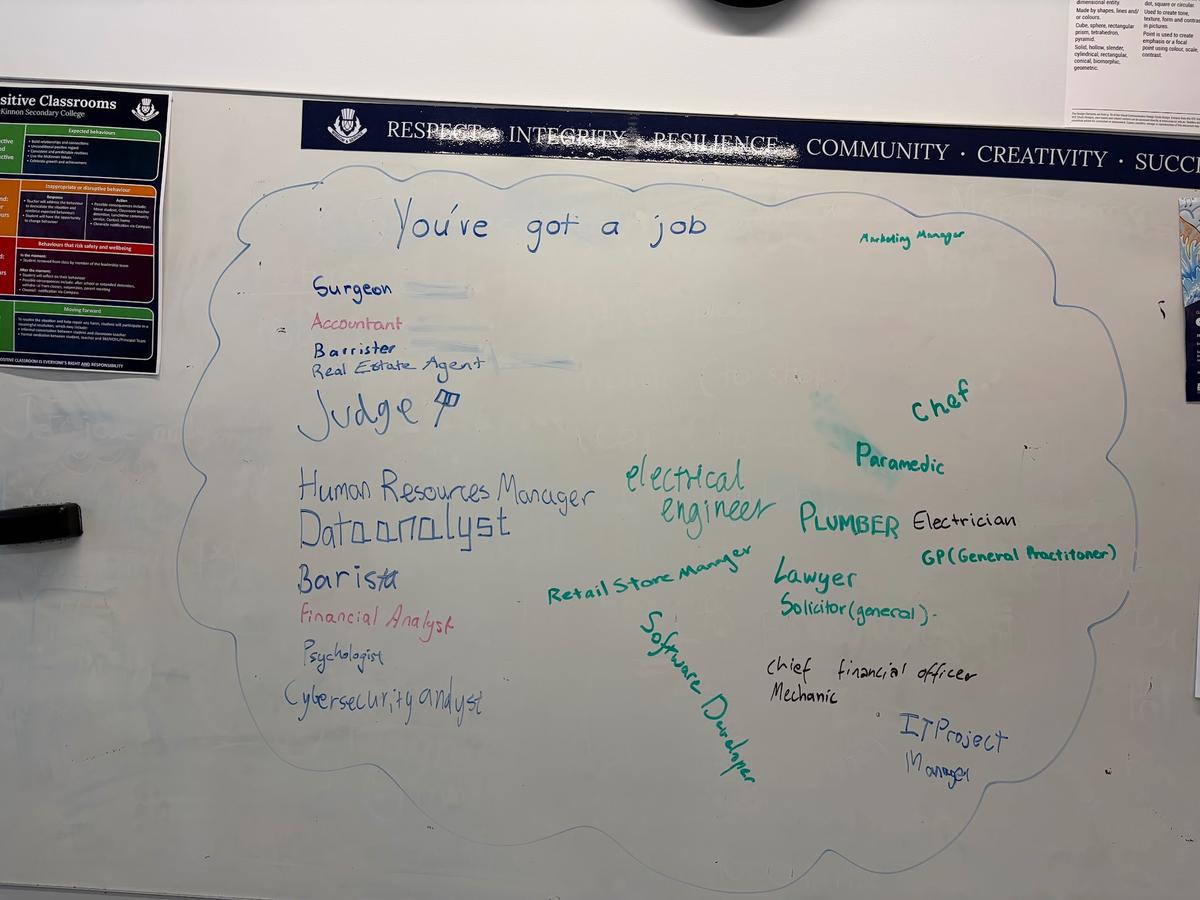
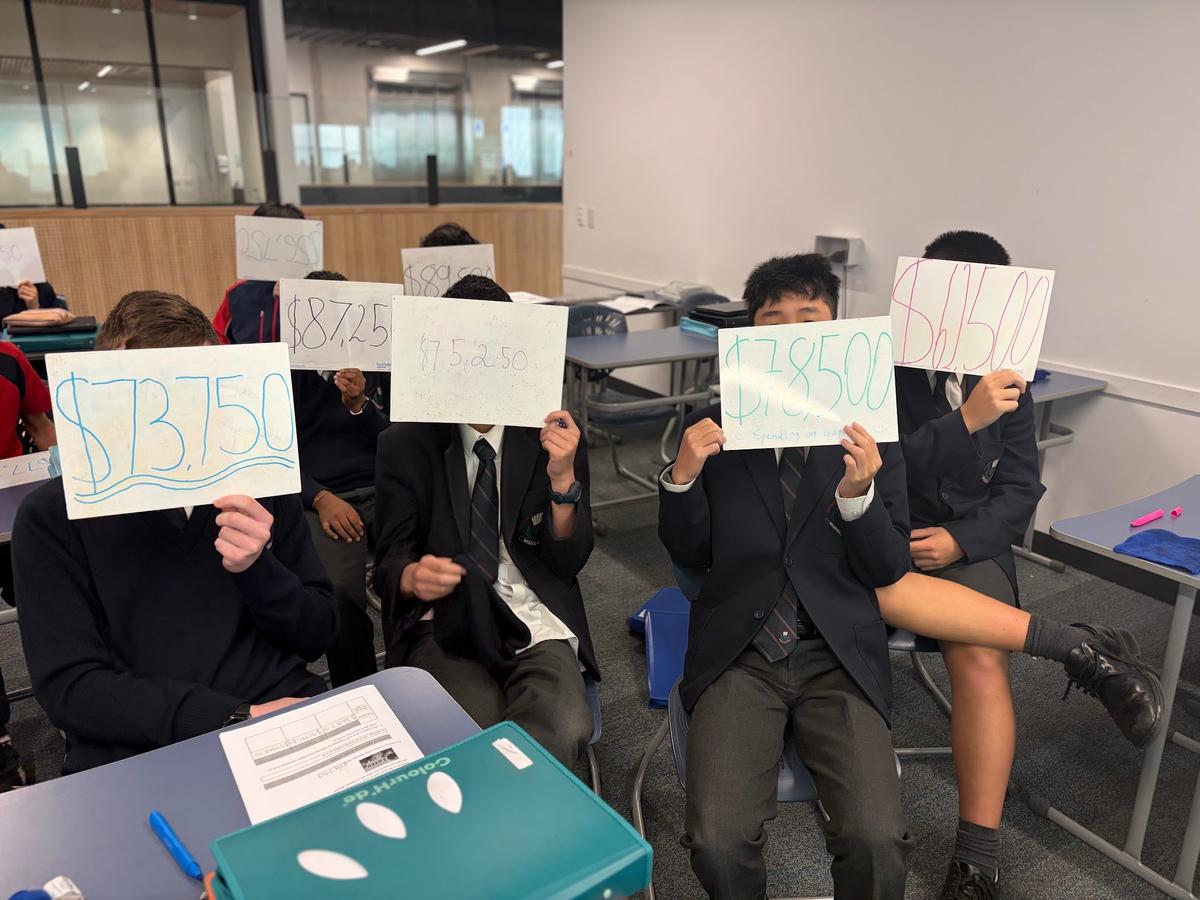
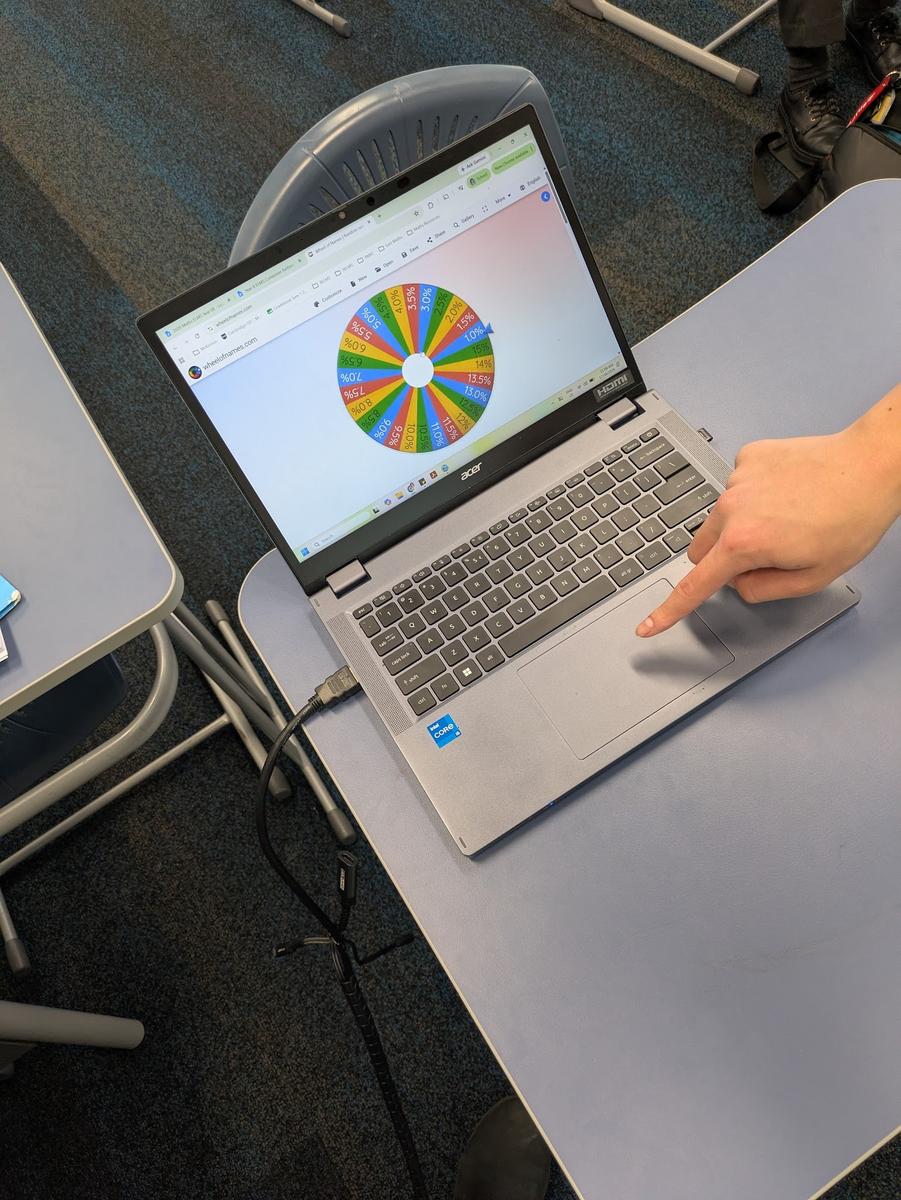
After the mayhem, we utilised specific formulas to calculate different types of interest and learnt how percentages are used in financial mathematics to compute increases and decreases in price. We studied the importance of how inflation and taxes affect your gross earnings and investigated the importance of tax cuts. As we received our random pay rises via a wheel spinner on the board, our eager eyes were glued to the screen to find out how much pay rise we achieved. After determining our new earnings, we analysed how deposits are used throughout bank loans, and how compound interest can be applied more frequently than simple interest.
Upon completion of the unit, we applied our newfound knowledge in a test; the ultimate challenge to find out how much we learnt. Ultimately, our lovely Year 8 Maths ELMS teachers had put on a masterclass and really let us dive into the ins and outs of finance and ‘Consumer Arithmetic’!


Jayden Bone & Raphael Goldman, Year 8
As a class of ELMS students, we worked through Lotto winnings to loans in a singular project. ‘The Consumer Arithmetic project’. We simulated a class lotto winning and with that we all split it using a very ‘fair’ system, a random choice. You were to spin a wheel of the lotto winnings and whatever you receive is your portion of the winnings. We began the unit with the basics of converting percentages. Then we delved deeper into the world of finance and began with simple interest. With the formula of (I=P x r/100 x T) we viewed and solved a few circumstances of if we were to deposit our lotto winning into a bank account. That was a simple yet complicated interest for all of us to solve.
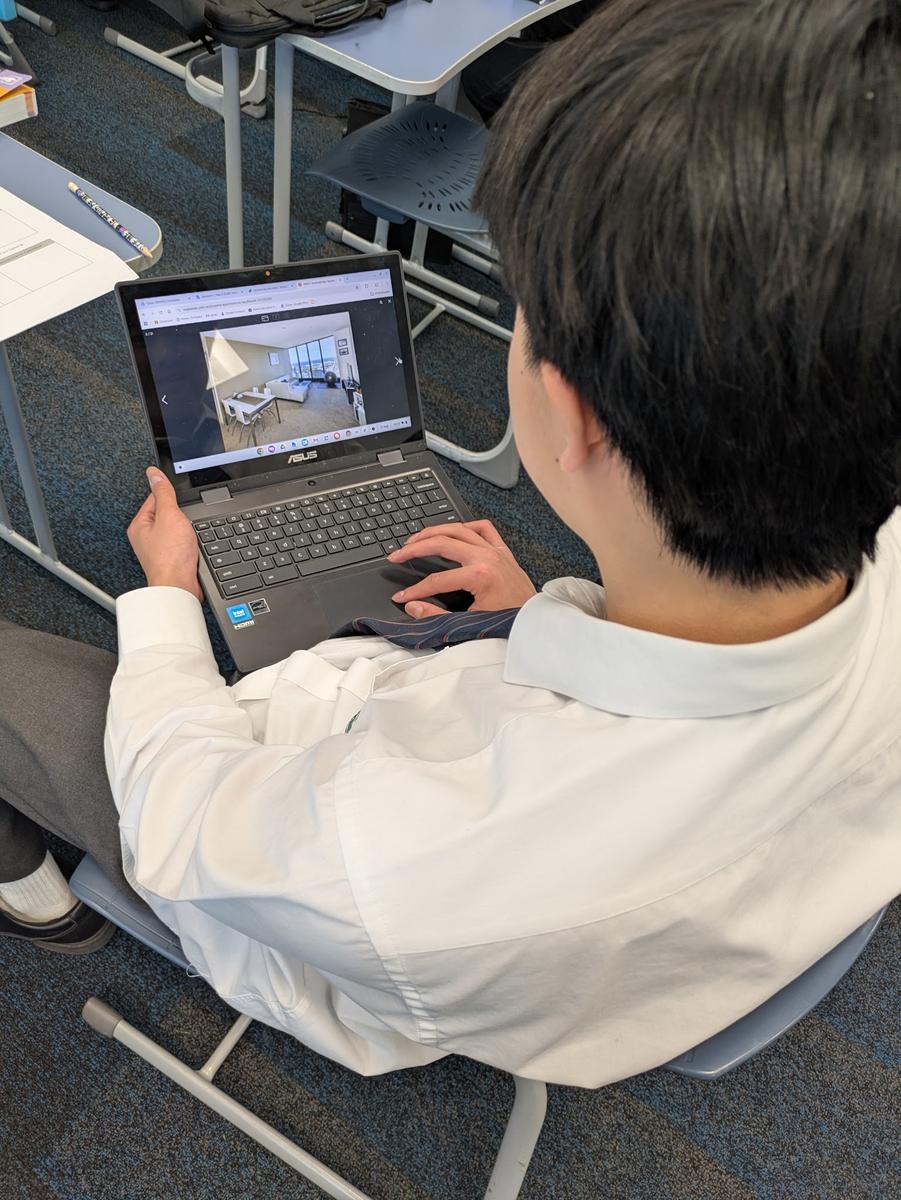
We then moved on to a more complicated form of interest which is called compound interest. With the formula of (A = P(1+r/100)^n) we began using real life simulations of compound interest. After solving some compound problems each of us got a job. We then calculated tax and even had a pay rise. Using our lotto winnings as a deposit and our income we each bought a house and took loans to pay it off.

Neeyum Gala, Year 8