
ICT

GROK - CYBER COMP (YR 7-8, YR 9-12) JUNE 2026
Grok are running a short two-week online competition which ends on Friday 19 June for students in Years 7 and 8, they will be tested and will learn about cybersecurity! They will learn about secure passwords, phishing, security settings, social media and more! They also have a stream for students in Years 9 to 12. The competition is aimed at an intermediate level.
The competition started on Monday 8 June, and will conclude on Friday 19 June. Students will complete a 45-minute timed session to answer key questions and concepts related to cybersecurity. Students will need to make sure they have 45 spare minutes to complete the competition in one sitting.
If this sounds like something you would be interested in, please email hmn@mckinnonsc.vic.edu.au so you can be added to the competition.
Ms Mary Ho
(ICT Learning Manager | Teacher of ICT)
FROM CONFUSED TO CODING: LEARNING MARKOV CHAINS IN PYTHON
Recently, I attended a girls' programming network workshop. It was a fascinating experience that taught us about how AI can predict text based on human inputs.
During the workshop session, we learned about Markov chains. At first, we were all confused, but then we understood it’s actually an effective way for computers to predict the next few words by analysing patterns within the human input. Before creating our own Markov chains, we looked at some examples like ‘Green Eggs and Ham’ by Dr Seuss.
We created our own program that uses Markov chains to generate new words and sentences, similar to the technology we use at home.
One thing I learned was the basics of Markov chains and applied them to our own Python code. Overall, this experience was unquestionably worth it, and now I have a better understanding of Key AI concepts.
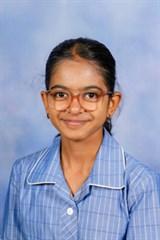
Hitha Desa, Year 7
CONGRATULATIONS TO KEIRA NIXON!
I’m delighted to share that Keira Nixon from Year 9, has been selected for the prestigious Girl Power in Engineering and IT Program at the University of Melbourne. She was one of just 40 students chosen from across Victoria to participate in this program, which aims to inspire and support young women pursuing STEM.
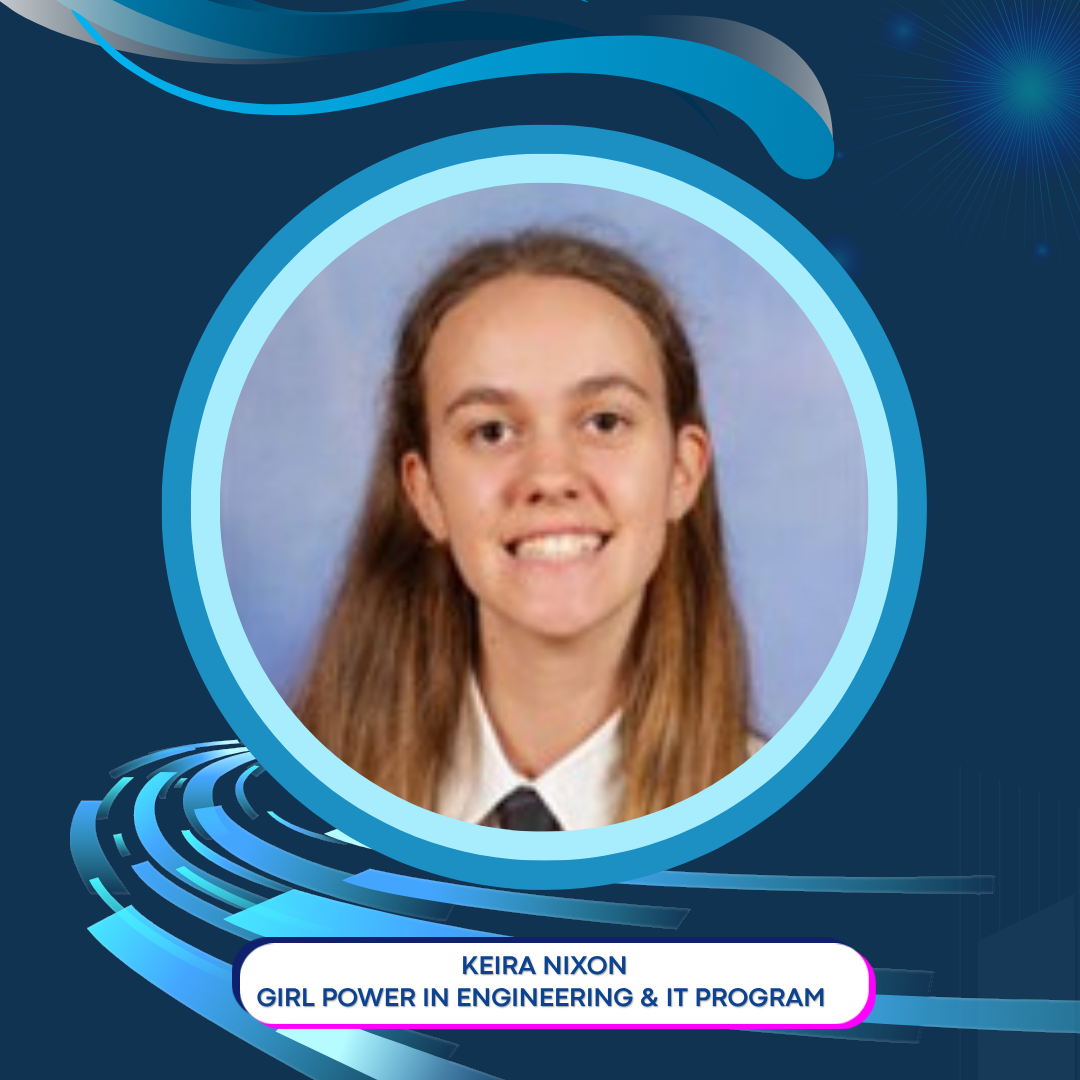
The program begins with a four-day residential camp at the University of Melbourne during the upcoming July holidays, where students will take part in hands-on workshops, learn about careers in engineering and IT, connect with university students and industry professionals, and build networks with like-minded peers. As part of the four-year program, participants will also have the opportunity to undertake work experience in Year 10 and engage in mentoring opportunities throughout Years 11 and 12.
I am incredibly proud of Keira for this outstanding achievement and look forward to hearing about her experiences after the camp.
I would also like to acknowledge the other Year 9 students from our school who applied. The selection process was highly competitive, and several of our students were identified as strong candidates and progressed to the interview stage. Their enthusiasm, commitment and interest in STEM are to be commended.
Divya Nellivila
ICT, Coding & Robotics Teacher
YEAR 10 ICT STUDENTS AND AIRTABLE
In Year 10 ICT, we have been learning how to use software called “Airtable” to create databases. In a world run and organised by data, knowing how to sort and manage it is a valuable skill.
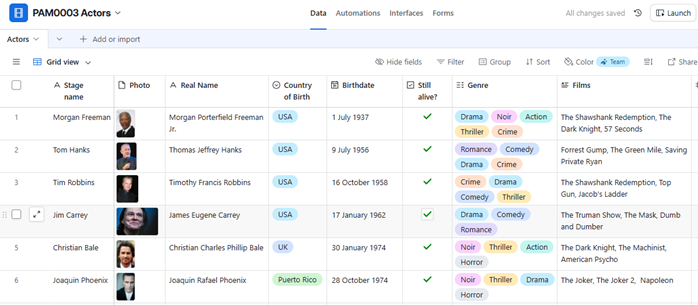
Airtable is completely free and is quite intuitive to use. We learnt how to enter data, filter and sort it, change the way it is displayed, link different tables together and even create forms so other people can add entries to our database. I would highly recommend it to anyone hoping to dip their toes into the world of information, as it is highly beginner friendly.
Overall, learning how to use Airtable was a fun and rewarding experience that I can carry on to other parts of my life.
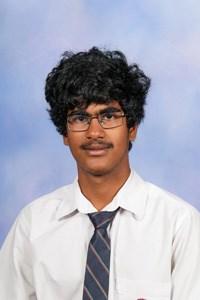
Sai Pammi, Year 10
YEAR 10 ENGINEERING - ARDUINO EXTENSION
Over the past few weeks in our Intro to Engineering class, we first began by using the Arduino kits to create a simple traffic light system. We completed this task earlier than others, which gave us extra time to explore a more advanced project using other devices.
Our project involved creating a device that could react to music by using a microphone sensor, RGB LEDs, a buzzer, and several other components. The aim was to have the lights respond to the beat of a song through a combination of circuit design and coding. The project involved a lot of trial and error as we tested different circuits, modified our code, and experimented with various components to improve the way the device responded to music.
There were plenty of challenges along the way, including sensors not behaving as expected, LEDs flashing at the wrong times, and code that refused to cooperate. Despite these setbacks, each problem gave us the opportunity to learn more about how Arduino systems work and how to troubleshoot issues effectively. We enjoyed seeing our project gradually improve as we made changes and tested new ideas. It was satisfying to watch the LEDs react to sound and see our design begin to work as intended.
Overall, the project has been an enjoyable experience that has helped us develop our skills in coding, electronics, and problem solving while giving us practical experience with engineering concepts.

Kira Barnes & Chris Limogiannis, Year 10