
ENGLISH
WRITER OF THE YEAR
At McKinnon, we are fortunate to have so many talented writers with the courage to put themselves out there in our Writer of the Month competition. All monthly winners are then automatically entered into our Writer of the Year competition, and the winner is announced at our final full school assembly.
In 2026, the quality of writing could not have been higher, so it made our choice very difficult. Across the pieces, there were so many interesting characters, story arcs and beautiful moments. Being able to open up a moment, find its presence, and make it important to other people is what makes great writing. One such moment can be found in a short story titled Viola, by Year 10 student Sidney Silkstone:
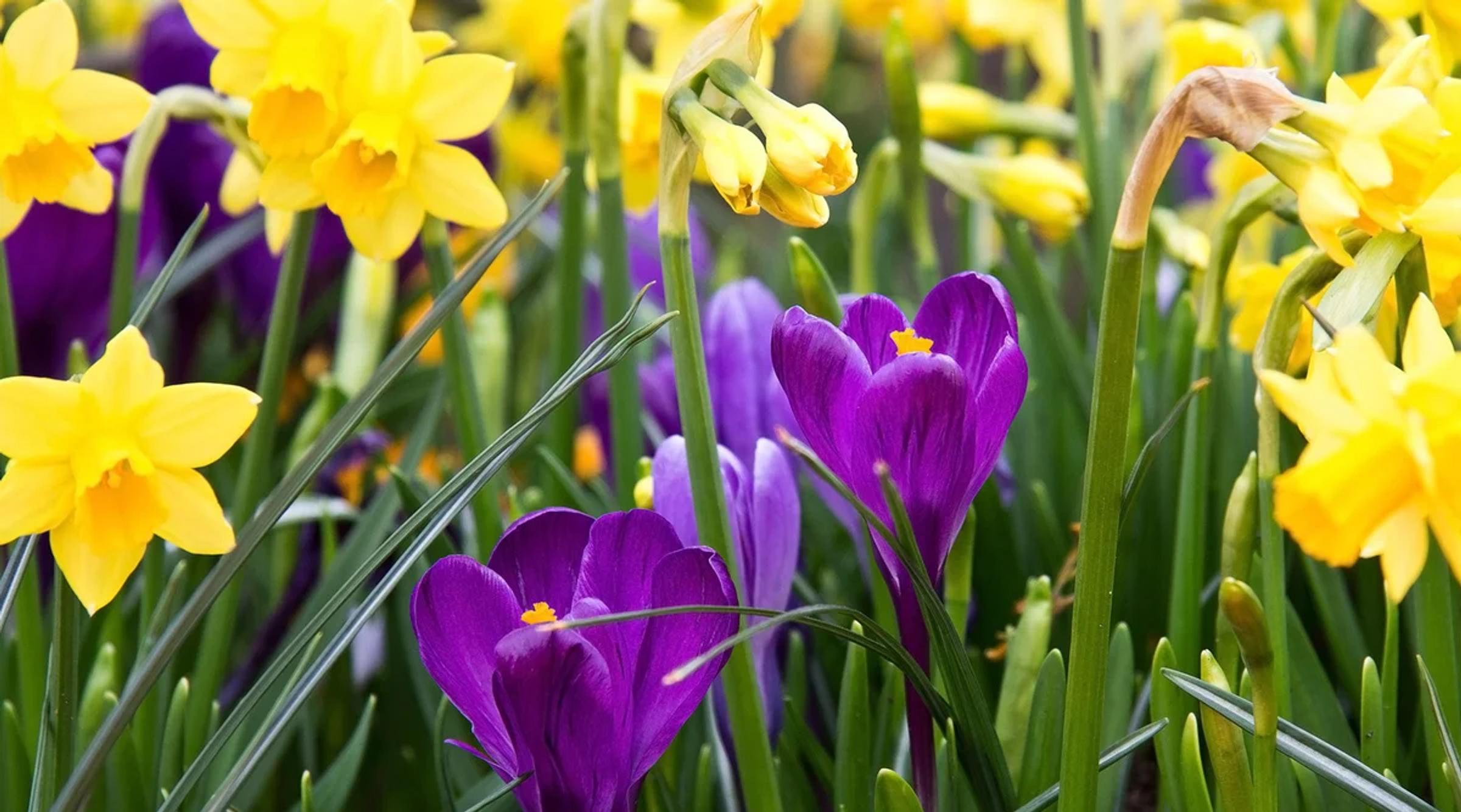
There are wild, fox-eared violets growing in patchy, sporadic clumps along the sides of the road, intermingled with eager daffodil bells that reach out in longing to the sun. Mrs Chaney sees their velvety cupped hands slowly filling up with trickling water. She can feel them for a brief moment, tickling her ankles as she dances among their petals. She does not know how they can grow on this dense forested mountain. They are pretty, in their own fragile stubborn way. They are a long-held question she cannot answer.
That excerpt, along with the rest of the story, is in fact what made Sidney Silkstone the first ever Year 10 entrant to be awarded the title of McKinnon’s Writer of the Year!
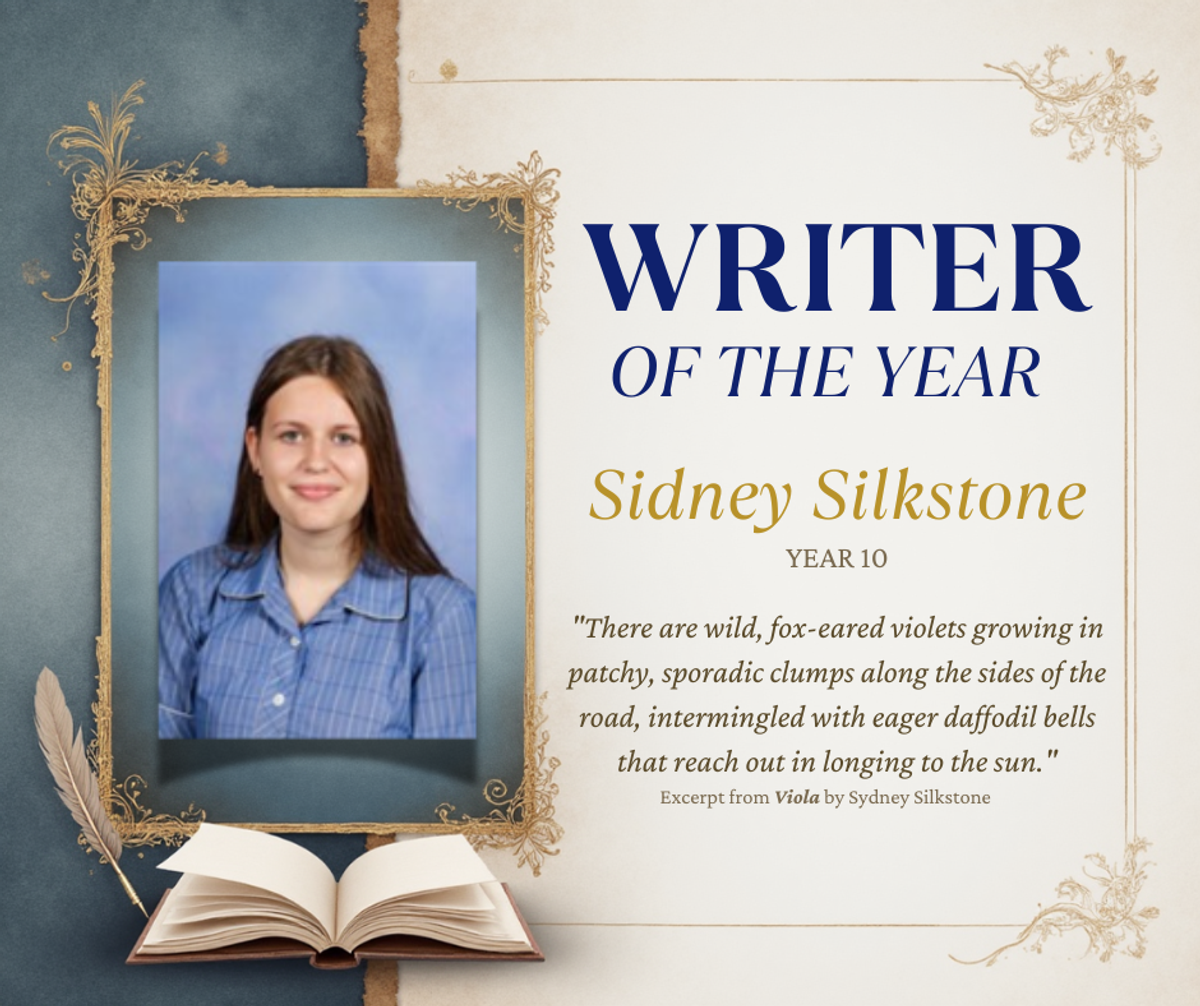
Congratulations to Sidney, and we cannot wait to read more of your wonderful writing in the coming years.
Mr Babidge and Mr Papatolicas
Writer of the Month Coordinators
Viola
by Sidney Silkstone 10R
It takes Mrs Chaney a little over an hour to get to work; she leaves before seven. She rides her cruiser bike further down the mountain and enjoys the breeze in her hair, blown off from the roaring sea. The salt clings to her lashes, and she closes her eyes for a second before fixing them back on the road. In towns like hers, everything is either very close together or very far apart; she secretly wishes that it were the former.
Mrs Chaney has only had this job for two weeks, but she knows this route very well. It is one long, well-worn, asphalt road all the way down - flanked on one side by the forest, and the other side by the sea. Coming from the water, she can hear the nostalgic, dissonant song of the wind, blowing through all of the structures and trees and settling heavily into the pit of her stomach. It is a large drop down that cliff to the water, she thinks, thank god for the flimsy wire fences closing us off.
When Mrs Chaney passes Lovell Road, her first instinct is to keep straight. This route, of course, will take her to the run-down building where she spent the better part of her childhood. Instead, she swerves left, narrowly missing the electrical pole that holds up the street sign. In her juvenile rebellion, she had scratched her name into that pole many times, picking at it with rocks and razor-blades. It would be funny if she had hit it, it would be like those sticky, slow-moving years. But they will not come, she is bound for a different, more lucrative run-down building. She is no longer a child; she will not walk that road again.
As she rides down Lovell Road, the roar of the sea dissipates, and the forest swallows her up. Mrs Chaney feels a warm drop of water trickle down her spine like honey, then another on her forehead. She hops off her bike and pulls a rain jacket out of her backpack. She looks back behind her; she can no longer see the crossroads, just a long stretch of tarmac. In front of her, the road disappears into the horizon line, the thick foliage obstructing the view of anything to her sides. Mrs Chaney knows this route very well, yet this singularity is alien to her. She climbs back onto her bike and keeps peddling.
There are wild, fox-eared violets growing in patchy, sporadic clumps along the sides of the road, intermingled with eager daffodil bells that reach out in longing to the sun. Mrs Chaney sees their velvety cupped hands slowly filling up with trickling water. She can feel them for a brief moment, tickling her ankles as she dances among their petals. She does not know how they can grow on this dense forested mountain. They are pretty, in their own fragile stubborn way. They are a long-held question she cannot answer.
The air hangs thick and viscous, clinging to Mrs Chaney as she wades through the rain. It smells hot and sweet like fruit, as it comes down heavier by the minute. She squints her eyes to see through the torrent, but everything is blurred, a muddled mess of greens and browns. Her legs are becoming tired, and all she can hear is the rain, drowning out her thoughts. There is not much else for her to do, other than to keep going. The spurs of her bike whir rapidly, and she can feel it in her bones, cutting through the downpour and settling in her mind. This is what she focuses on.
Mrs Chaney's turn-off still isn’t visible. She feels a slight warmth in her fingertips, and thinks that she is gripping the handlebars too tightly. She glances down, and half-expects to see the dried, rusty floral blood under her thumb nails that comes from pricking at the violet's stringy limbs. She would weave one stem through another, all vibrant green except for the withered cauterised rot that spread from the slit she had cut. She would beam as she braided them into her straw-like hair, her hands stained with dirt and copper.
The smell is sickly now, cloying and over-ripe, impossible to ignore. Mrs Chaney relaxes her grip, but the warmth only grows, worsening and worsening until she is sweating from discomfort. Enveloped by the mountain, there is no-one to turn to.
She hasn’t realised how much her hands hurt until she begins to hear sizzling. Steam rises from the handlebars as rain hits the metal, which is now glowing dully with heat. Mrs Chaney looks down and feels it all at once. She lets go immediately, trying to slow down as she stumbles from the bike, entangled in the frame. Her skin is raw, beginning to blister, and hot to the touch. She curses and blinks away tears pricking at the corners of her eyes. It takes her ten more minutes to realise that she can no longer hear the rain. She can still feel it though, washing over her like blood, soaking through her clothes and plastering her hair to her neck.
In the distance, a familiar sound emerges, a faint melodic hum. It encloses her from all directions. The young saplings and bracken curl towards her, their tongues darting out and grazing her skin as one of her tears finally falls, staining the earth with its dirty, bronze squalor.
The forest floor pricks up at the taste, and each blade of grass, each alert and upright hair, pulls at her gravity.
Mrs Chaney knows this route very well, and she knows she should be at work by now. It only takes her a little over an hour to get to work, that’s why she leaves at seven. She looks down at her watch as the clattering of windchimes descends upon her.
Mrs Chaney opens her mouth to scream; but only violet petals fall out.
The clock is frozen at seven fifteen.