
SCIENCE
UNIT 4 PSYCHOLOGY SLEEP INCURSION
The world of sleep science came to life for the Year 12 Psychology students on Thursday 4 June, during an incredibly engaging incursion.
Let’s be honest: as VCE students, we treat sleep like a luxury we can’t afford. We routinely trade hours of valuable sleep for late-night revision, fuelling our minds on caffeine and the collective anxiety of the cohort.
But a visit from a guest sleep scientist, Sebastian Gray from the Turner Institute at Monash University completely rewrote our understanding of the night shift, proving that what happens when the lights go out is just as dynamic, complex, and vital as anything we do under the sun.
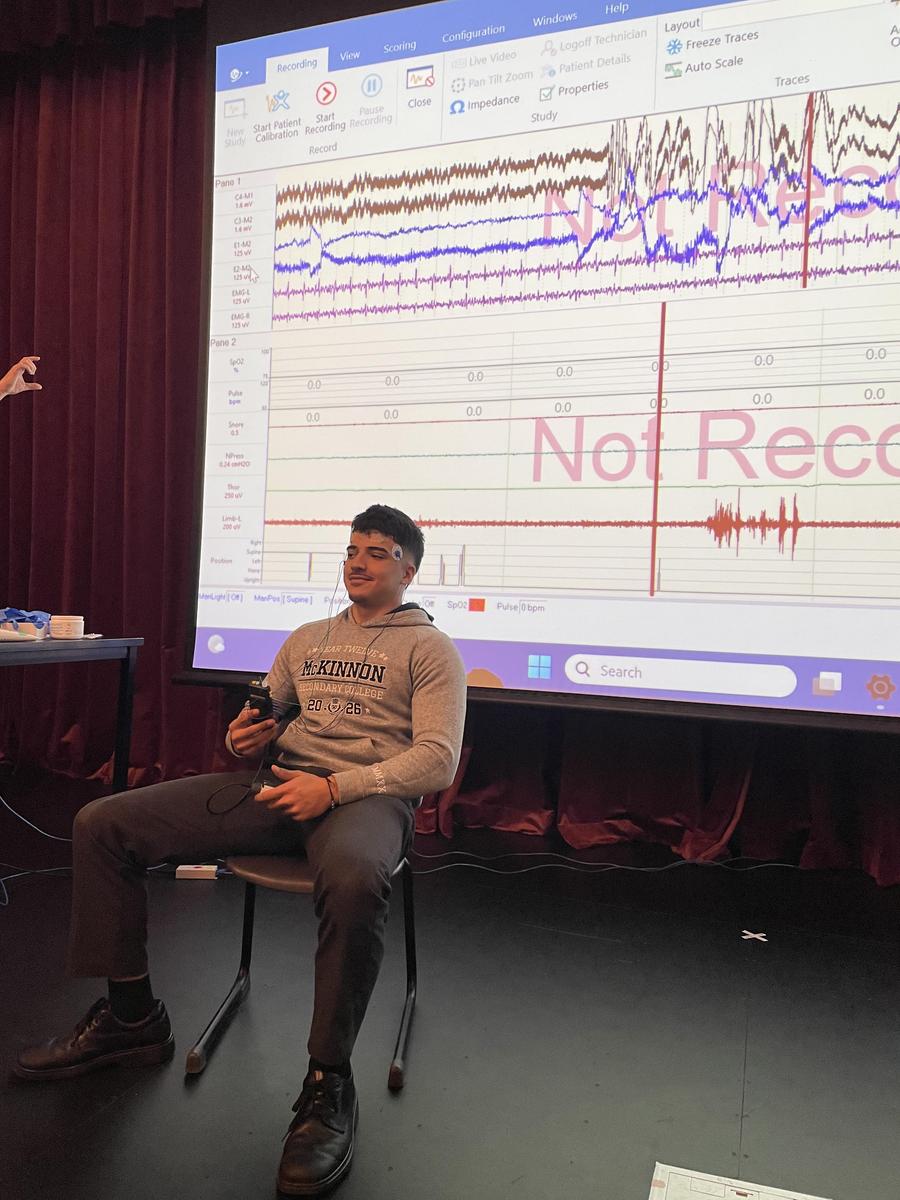
The centrepiece of the session felt less like a lecture and more like a live lab experiment. One of our brave peers volunteered to be wired up to a polysomnography machine, instantly transforming the space into a real-time sleep clinic. Tracking brain waves on the EEG, observing eye movements on the EOG, and monitoring muscle tension on the EMG, we watched in real-time as they drifted from the waking world straight into the vivid realm of dreams.
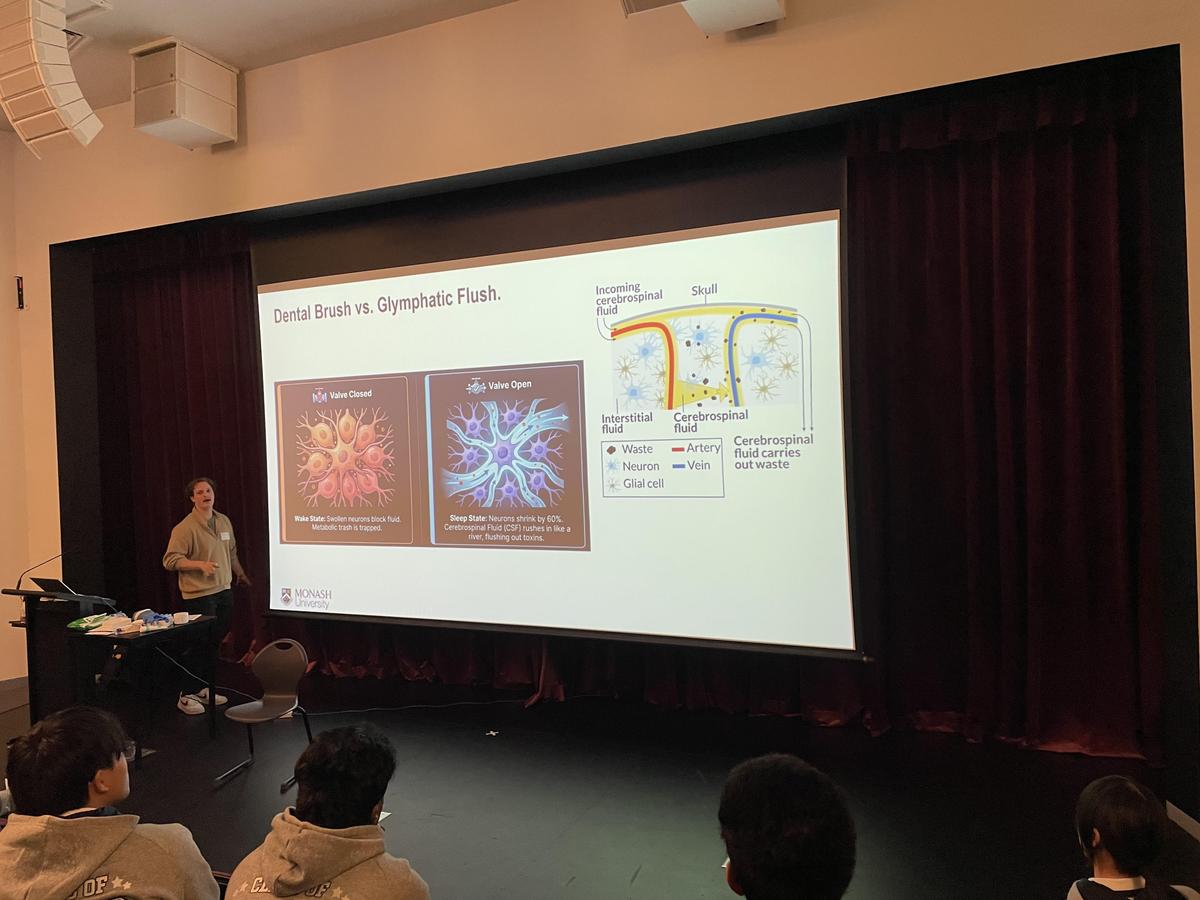
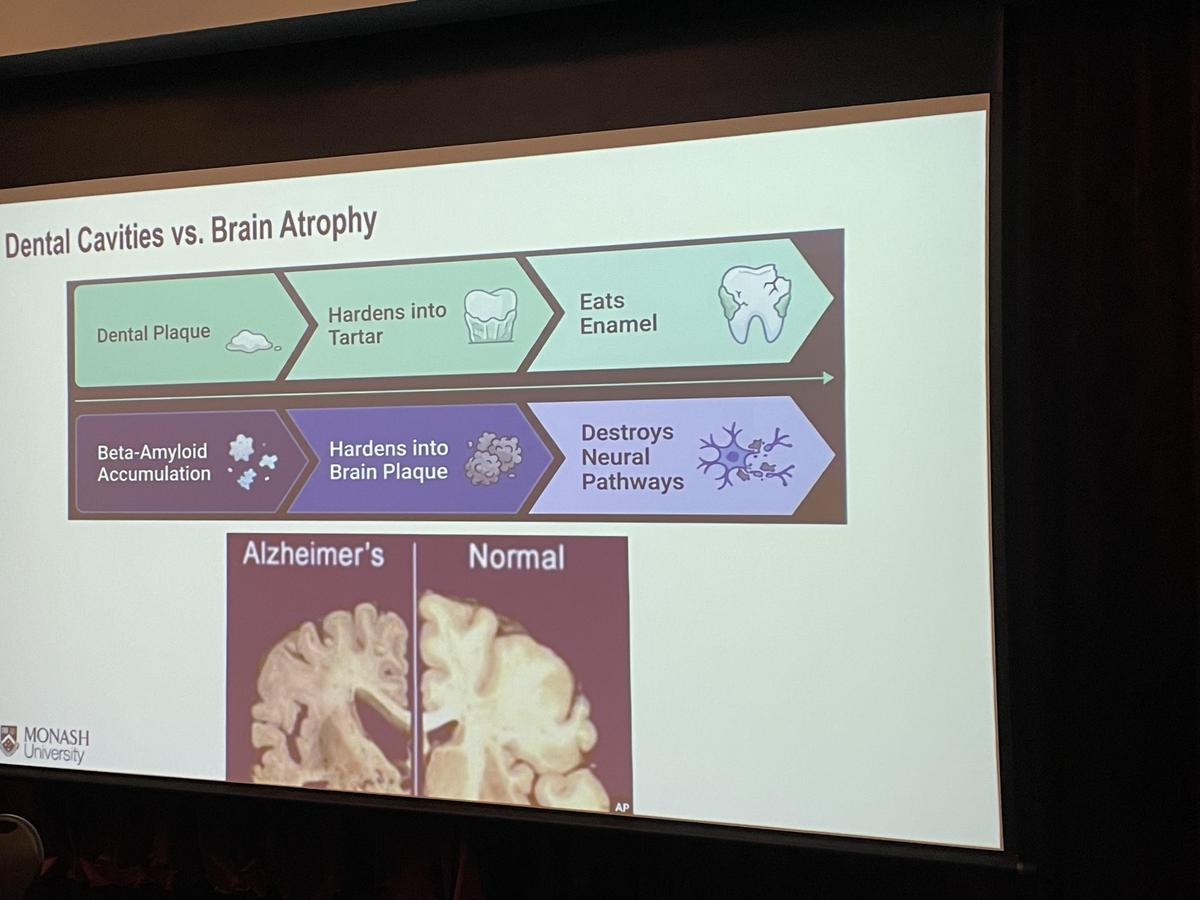
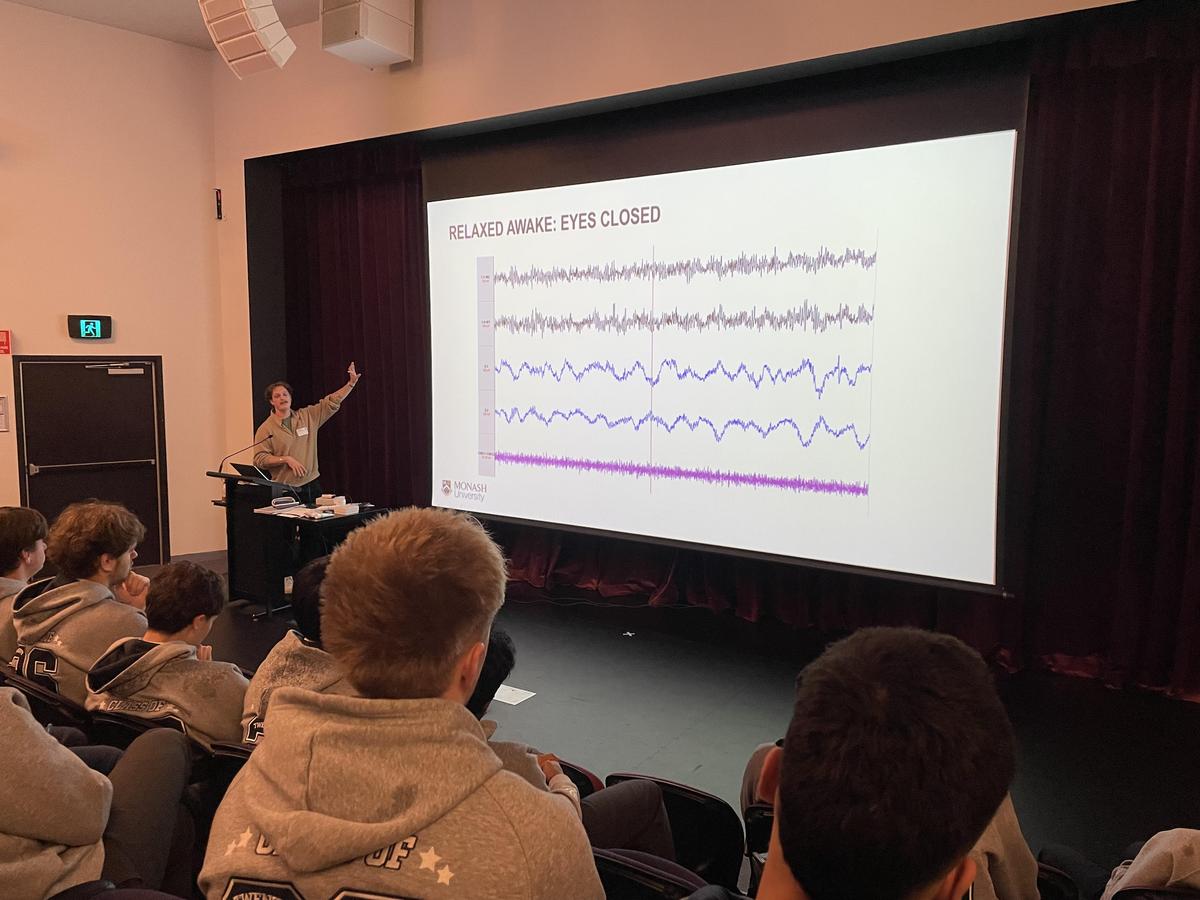
This deep dive into science forced us to confront our own chaotic sleep hygiene. We mapped the intricate dance of the circadian rhythm. The big revelation? Our late-night doom scrolling is actively sabotaging us. That glowing blue light mimics daylight, tricking the suprachiasmatic nucleus (the brain's internal master clock) into holding back melatonin.
To protect our cognitive sanity, the scientist challenged us to adopt a few non-negotiable habits such as anchoring a strict bedtime and wake-up time, creating a screen-free "wind-down" buffer zone, and treating our beds as sanctuaries for rest rather than extensions of our study desks.
An immersive experience like this doesn't just happen on its own. A massive thank you goes to our wonderful Psychology teachers for orchestrating this incursion and transforming dry textbook chapters into a living, breathing reality. Finally, thank you to our guest speaker for an eye-opening session that left us all with plenty of food for thought, AND a sudden urge to finally get a good night's rest!
Kiara Naidoo
Year 11 Student
APPROACHES TO LEARNING WITH UNCLE MARK BROWN FOR YEAR 12 PSYCHOLOGY
During a recent visit from Uncle Mark, Year 12 Psychology students had the opportunity to gain insight into the Aboriginal and Torres Strait Islander Peoples ways of knowing and cultural learning.
His presentation shared the importance of storytelling, due to being an oral culture, as stories are passed through relationships and continue for generations.
Uncle Mark discussed the First Nations power of ‘Deep Listening’, which is when observations from one environmental factor coincide with another, for example, a particular flower blooming demonstrates that fish in a nearby river are plentiful. It was also fascinating that each individual has a role to care for a particular area of the environment.
Finally, the most eye-opening part of his presentation was to hear about his personalised connection to the land, known as Country. He explained that he felt a strong connection to a certain area near Werribee, helping to form his identity.
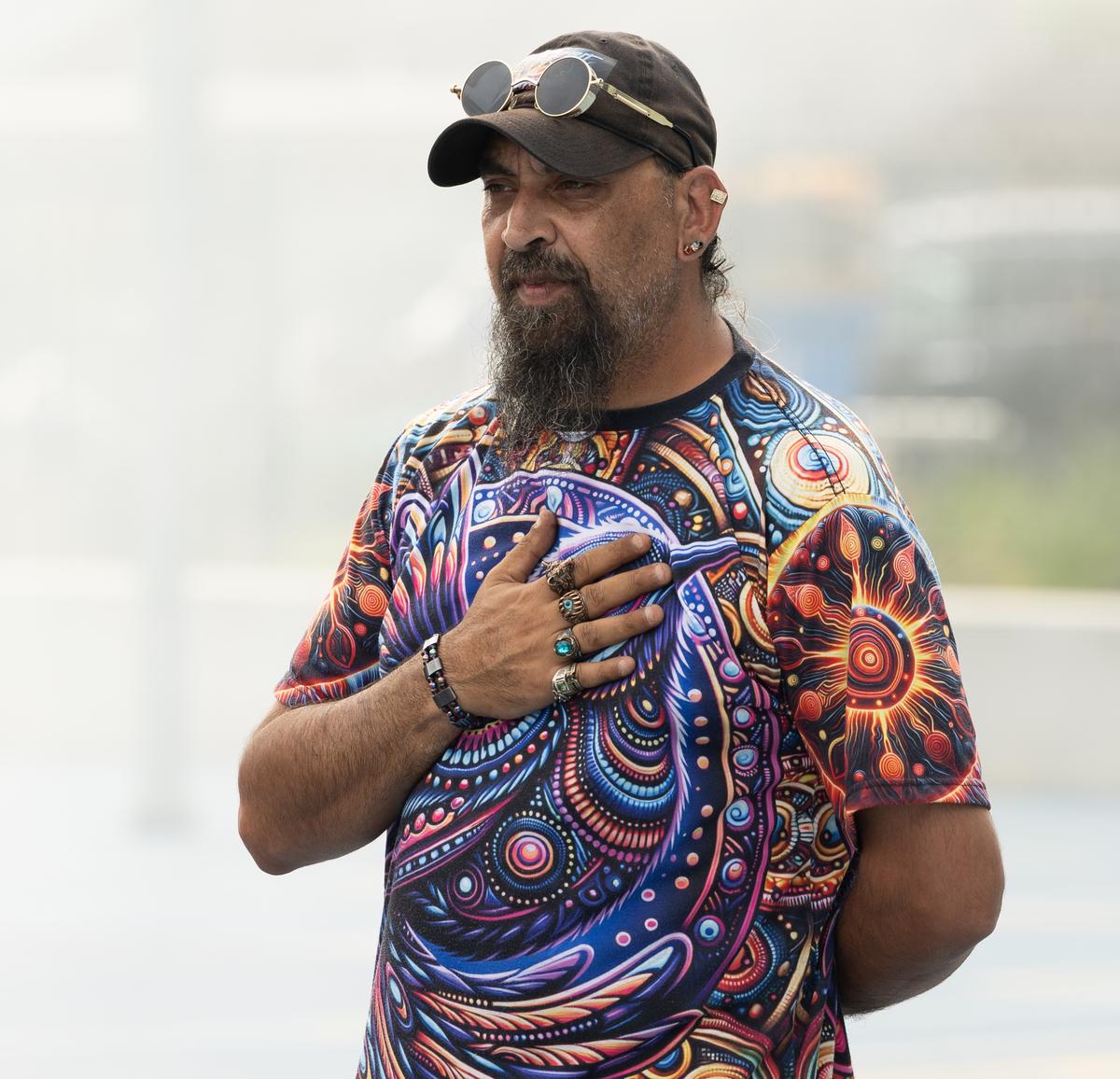
Overall, this experience broadened my perspective on how there are many approaches to learning and memory beyond Western methods. It was greatly linked to the learning students are doing in Year 12 Psychology and no doubt helped with a deeper understanding of Aboriginal and Torres Strait Islander Peoples cultures.
Soly Batkilin
Year 11 Student